Cyril Ramaphosa Biography
Matamela Cyril Ramaphosa is the 5t President of South Africa, serving since February 2018, and the Chairperson of SADC since August 2026.
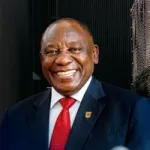
| Legal Name | Matamela Cyril Ramaphosa |
|---|---|
| Born | November 17, 1952 (Age 73 Years) |
| Nationality | South African |
| Profession | Politician, businessman, lawyer, trade unionist, philanthropist, activist |
| Alma mater | University of the North, University of South Africa |
| Spouse | Tshepo Motsepe |
| Key affiliations | African National Congress, Congress of South African Trade Unions |
| Previous positions |
|
Early Life and Background
Matamela Cyril Ramaphosa was born on 17 November 1952 in Johannesburg, South Africa. He is the second of three children born to Erdmuth and Samuel Ramaphosa, a retired policeman. Ramaphosa grew up in Soweto, where he attended local primary and high schools. He completed his high school education at Mphaphuli High School in Sibasa, Venda, in 1971.
Education
Ramaphosa registered to study law at the University of the North (now the University of Limpopo) in 1972. While at university, he became involved in student politics, joining the South African Students' Organisation (SASO) and the Black People's Convention (BPC). He was detained for 11 months in 1974 under the Terrorism Act for organizing pro-Frelimo rallies. After his release, he continued his legal studies through correspondence with the University of South Africa (UNISA), obtaining his Bachelor of Procurationis degree in 1981.
Career and Public Service
Early Career and Anti-Apartheid Activism
After completing his legal qualifications, Ramaphosa joined the Council of Unions of South Africa (CUSA) as a legal advisor. In 1982, he founded the National Union of Mineworkers (NUM) at the request of CUSA and served as its first General Secretary until 1991. Under his leadership, NUM grew significantly, becoming the largest union in South Africa.
Ramaphosa played a crucial role in the establishment of the Congress of South African Trade Unions (COSATU) and was involved in the Mass Democratic Movement against the apartheid government. Following the unbanning of the African National Congress (ANC) in 1990, he became the ANC's Secretary-General and chief negotiator during the negotiations that led to the end of apartheid.
Political Positions
After South Africa's first democratic elections in 1994, Ramaphosa was elected as a Member of Parliament and became the Chairperson of the Constitutional Assembly, overseeing the drafting of the new constitution. He resigned from politics in 1996 to pursue a business career, founding the Shanduka Group in 2001.
Ramaphosa returned to politics in December 2012 when he was elected Deputy President of the ANC. He was appointed Deputy President of South Africa on 25 May 2014. In December 2017, he was elected President of the ANC and subsequently became President of South Africa on 15 February 2018, following the resignation of Jacob Zuma.
Key Developments
As President, Ramaphosa has focused on economic reform, anti-corruption measures, and addressing social issues such as land reform. His administration has faced challenges, including allegations of corruption and internal party opposition. In the 2019 general elections, the ANC, under his leadership, won 57.5% of the vote, securing his first full term as president on 25 May 2019.
In June 2024, Ramaphosa was re-elected as President of South Africa after the ANC lost its outright majority in the general elections. He was subsequently inaugurated for his second term on 19 June 2024.
Current Appointments and Status
As of August 2026, Ramaphosa serves as the Chairperson of the Southern African Development Community (SADC), having assumed the position during the 46th SADC Heads of State and Government Summit held in Durban.
Personal Life
Ramaphosa is married to Dr. Tshepo Motsepe, a medical doctor, and they have an estimated five children. He has been involved in various philanthropic efforts, including the establishment of the Cyril Ramaphosa Foundation, which focuses on education and small business development.
Conclusion
Matamela Cyril Ramaphosa's career spans significant roles in both the political and business sectors of South Africa. His leadership has been marked by efforts to address the legacy of apartheid and the challenges facing contemporary South Africa.

